
Ford Fiesta 1.0 L EcoBoost Mild Hybrid
The Ford Fiesta engine rig shows how the 1.0-litre EcoBoost engine works with its 48-volt mild-hybrid system. Test points and fault simulation support hands-on exercises.
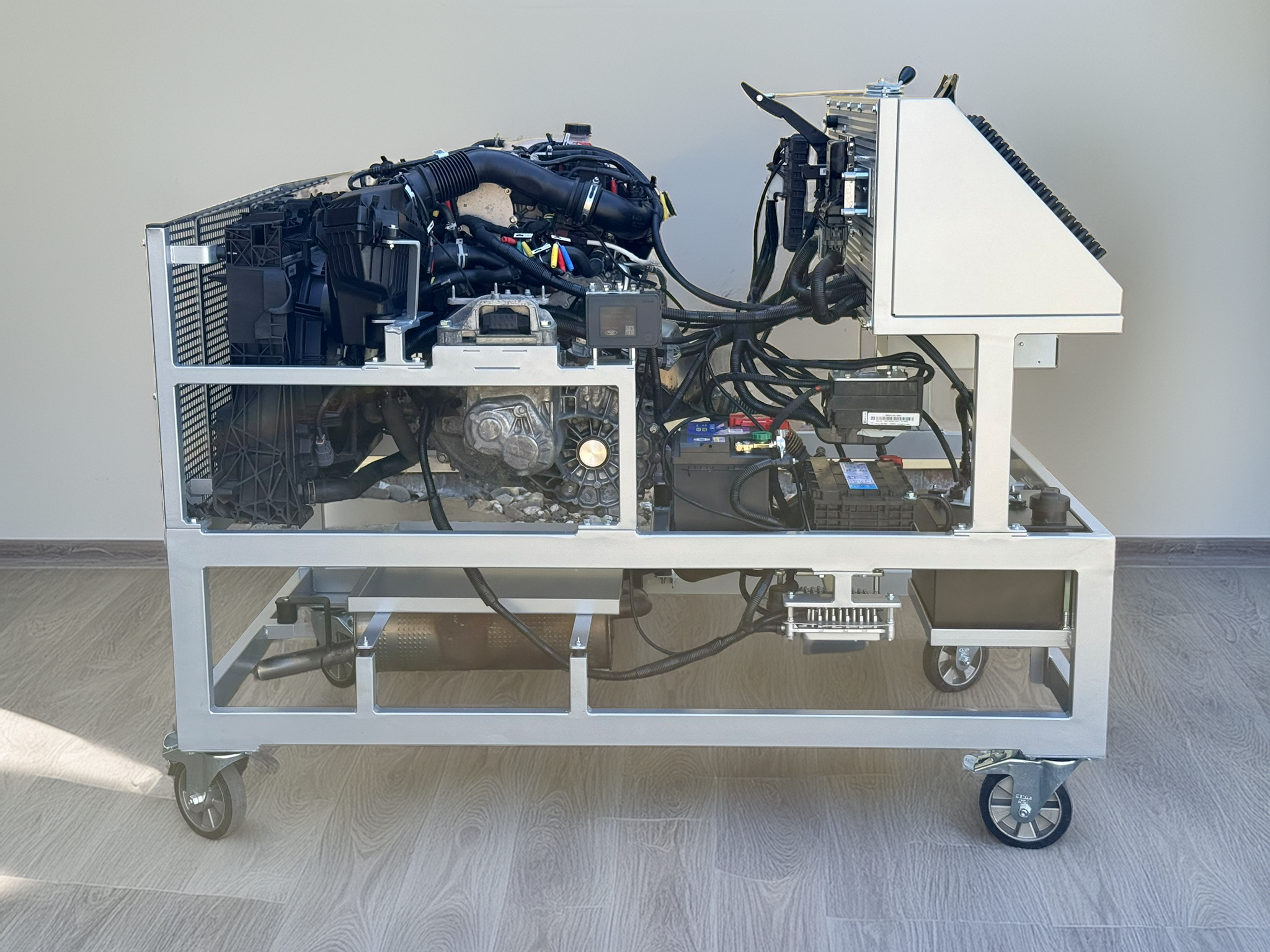
Original vehicle system
The engine, control units, sensors and electrical system work together as they would in the original vehicle.
Direct measurement access
Labelled test points allow electrical signals to be checked using a multimeter or oscilloscope.
Integrated fault simulation
Typical electrical faults can be introduced through the fault simulation and tracked down step by step.
Mild-hybrid technology on the engine rig
The rig provides access to the original 1.0-litre EcoBoost engine and its 48-volt system, so learners can explore the components directly.
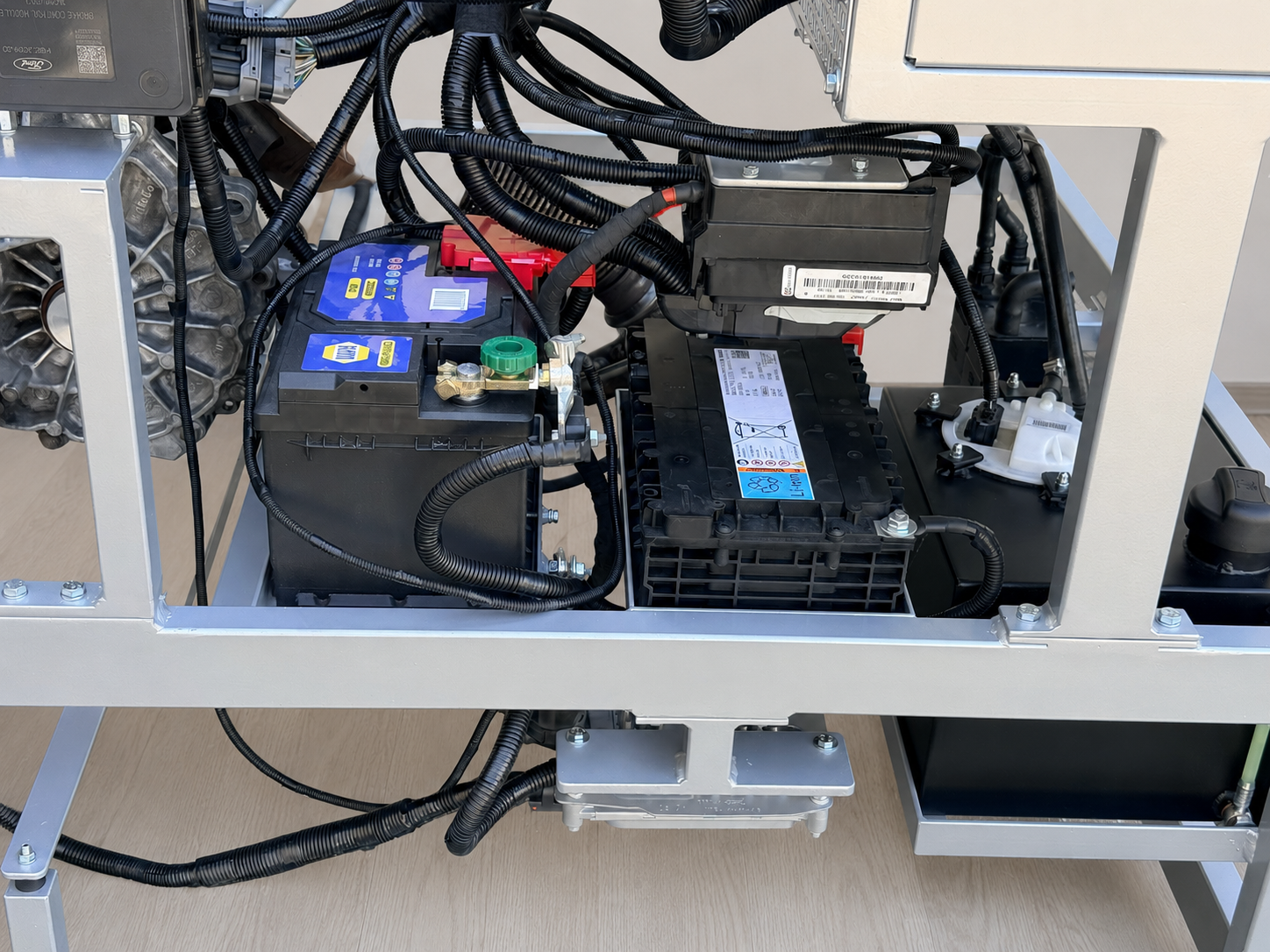
48-volt and 12-volt systems in the real vehicle network
The relevant components of the 48-volt and 12-volt electrical systems are clearly visible on the training rig and can be incorporated directly into practical system analysis.
The interaction between the combustion engine, electrical assistance, energy storage and the different voltage levels can be examined directly on the real vehicle system.
The open design makes it easy to identify individual components and wiring connections, providing a practical basis for diagnosing modern mild-hybrid systems.
Measure and diagnose directly on the vehicle system
The operator console, vehicle diagnostics and accessible measurement points enable practical diagnostic procedures. Electrical values and vehicle information can be compared directly and evaluated systematically.
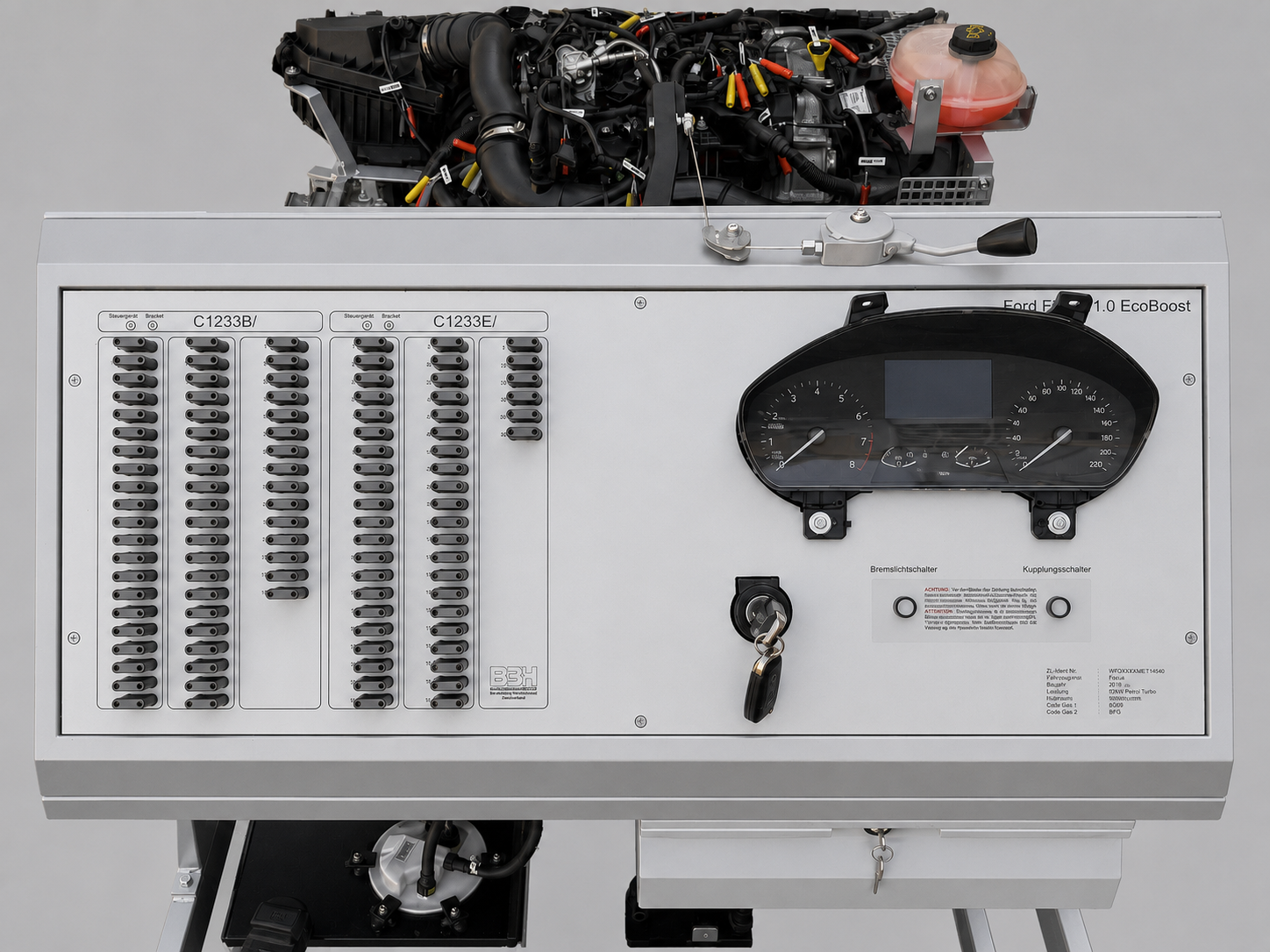
Operating, measurement and diagnostic console
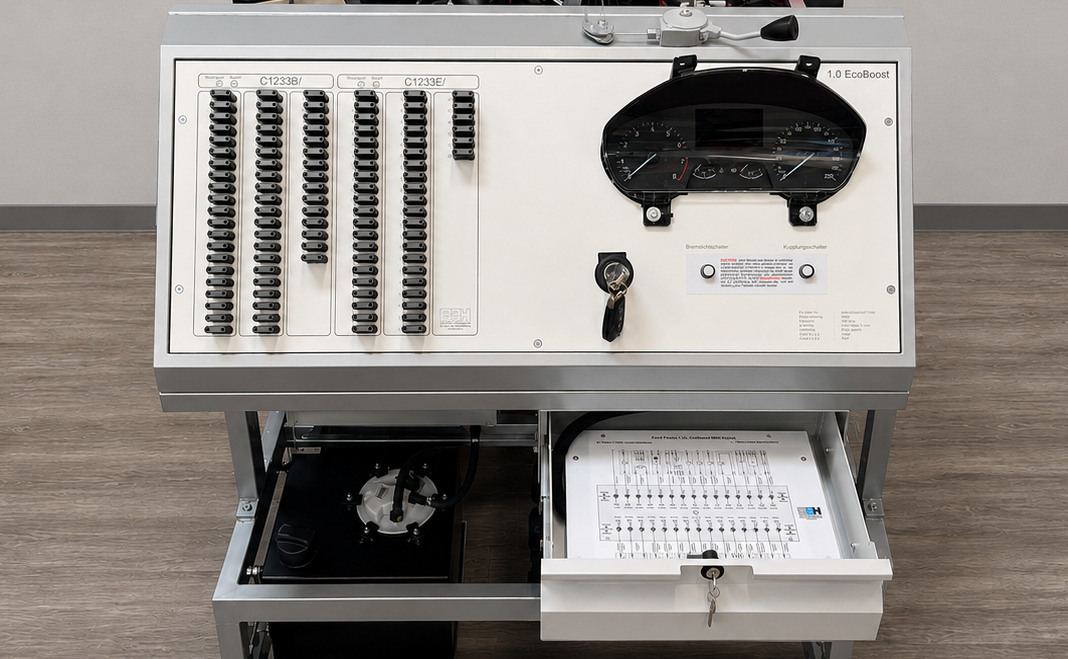
The operating and diagnostic console forms the central interface between the user and the functional engine. The original instrument cluster displays the relevant vehicle-system information realistically.
The required switches and controls are also located directly on the console. Measured values, vehicle states and diagnostic information can therefore be compared immediately.
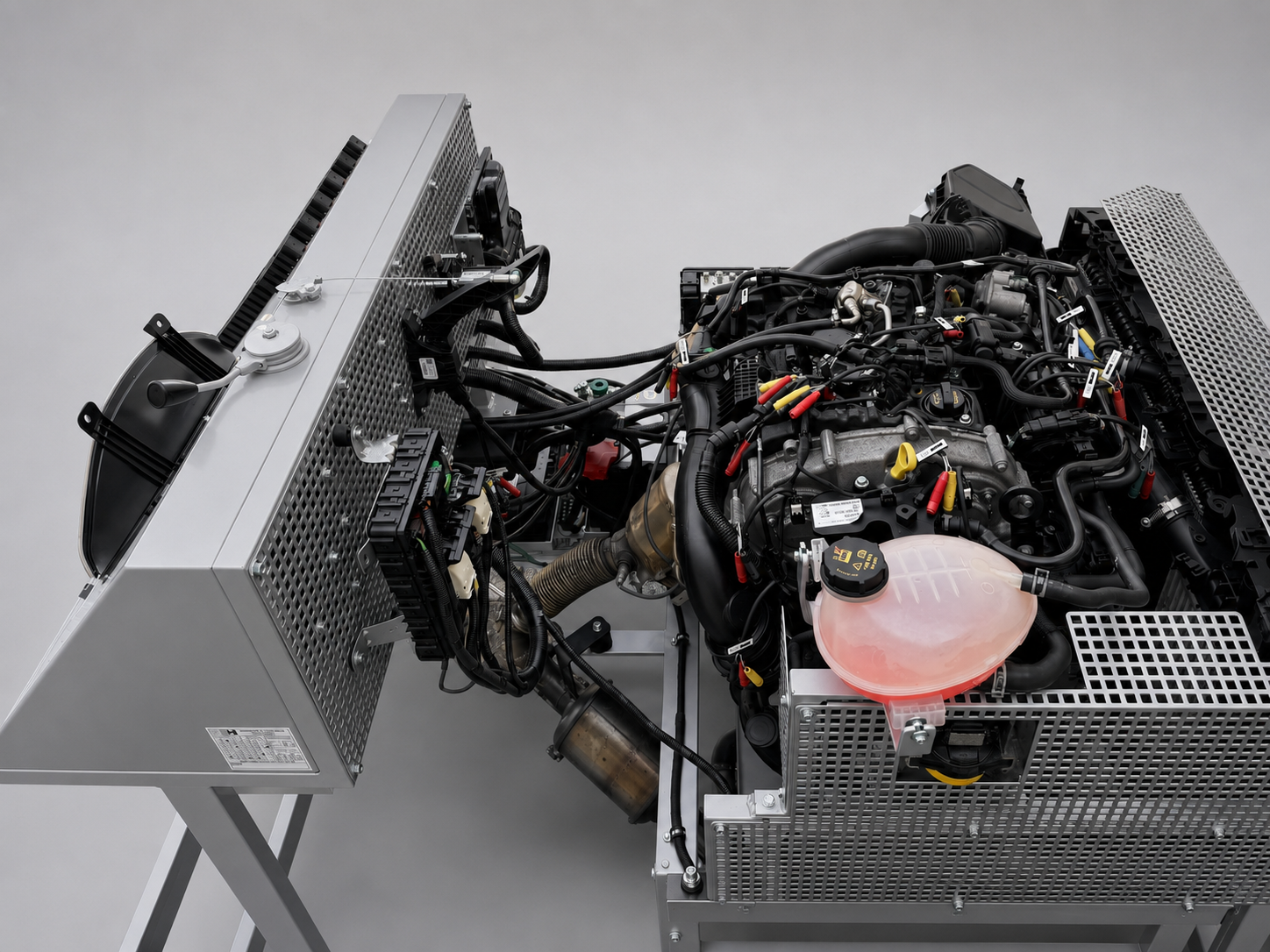
Measurement sockets on sensors and actuators
Measurement sockets are permanently accessible at selected sensors, actuators and control-unit connections. This makes it easy to record electrical values directly on the fully functional system.
Voltage, resistance and signal measurements can be carried out without having to open or modify the original wiring harness for each measurement task. Clear labeling allows the individual measurement points to be identified quickly.
Systematic troubleshooting under realistic conditions
The functional engine features an integrated fault circuit that can deliberately simulate electrical system faults for diagnostic, training and examination tasks.
The fault circuit is protected inside a lockable drawer directly on the operator console. Introduced faults can then be analyzed and located using the vehicle diagnostic system and targeted measurements at the available measurement connections.
Exercises with the mild-hybrid system
The rig supports exercises covering electrical systems, energy storage, vehicle diagnostics, measurements and fault finding.